
Abrindo Trilhos, Tecendo Redes (lançamento do livro)

Na próxima segunda-feira, dia 22 de Março de 2010 pelas 18:00 será feito o lançamento do livro Abrindo Trilhos, Tecendo Redes. Reflexões e Experiências de Desenvolvimento Local em contexto Lusófono, na Livraria Barata na Avenida de Rome 11-A.

Eu sou co-autor, contribuindo com um capitulo para o livro, com o tema: Os cetáceos de São Tomé e Príncipe: A luta pela biodiversidade e dignidade de um povo.

Convite

O livro é publicado pelo Centro de Estudos Africanos (CEA- ISCTE), Universidade Autónoma de Lisboa (UAL) e a Faculdade de Ciências e Tecnologia (FCT).

TIA, bru!

0035 of the 04/04/200 I was sitting at the 25A seat of the STP Airways taking off to Sao Tome (ST). I don’t understand why they feed us 2 courses within 5 hours when we are flying over night and what I really wanted to do was SLEEP, NOT EAT!

Landed ST at 0634 with people at the side of the landing platform waving at us and some dogs running around the track…

With much less sleep than what I need, and when I don’t get the sleep I nee I get very, VERY grumpy and stressed. So, I kept blaring inwards because the cue was taking too long, people were just taking silly photos and not moving etc.

At the vaccination pitch I met the always smiling Isaura Carvalho (the main organizer of the event) and her husband José Carlos Silva (a very famous chef) that helped us getting ready for the hotel.

At the way out I met Luis Noronha my long friend and guide of ST. After a small chat about life and how is ST going and the people that I know here we parted ways and I went o the new Pestana Sao Tome – Ocean Resort Hotel. Helping me up to my room as the nice Adécio, whom I’ve met the other 2 previous times I was here. He didn’t recognized me wt short hair (contrary to the long haired guy who was here the last time) and so I started to play him around saying he looked like someone from Sporting (a Portuguese football team), knowing that he is absolutely crazy about it and coaches a team of young kids here in the island.
I generally don’t fancy much this 5 start luxurious facilities with people more grumpy people than me with little sleep (normally I’m a nice chap!). However I must say that with the view I have from by balcony overseeing the ocean and a big part of ST’s coastline, this must be the best “office” I ever had (the balcony has internet access and all). I would however, maybe, change this for the Roça São João dos Angolares and its entire traditional and tropical feel. I Know I’m just taking the piss being so picky…

Pestana Hotel

After a short while I headed down to the hall, got on the mini-bus and entered the meeting at Aula Magna near the MARAPA office. All morning session I was struggling to keep my eyes open and gutted at the fact I could not get my hands on a cup of coffee, which I eventually did at the break of the meeting. Morning session was a full one with very interesting presentations. However I would like to mention 2 of them, the ones I caught all my half sleeping attention:

1)      The talk given by Rogério Roque Amaro (ISCTE):
Is the local development wanted and possible in STP?

I particularly liked the way he started addressing the people in the room by saying that he normally does not follow protocol and would like to greet every person present in the room in the same way (while others were giving praise to different people in relation to their social status).

He started by explaining the history of the concept and methodology of the “local development” movement, as it started to be put in practice by member of UN & FAO, even contrary to the models and practices of those organizations. Normally the ways of a more developed country, nation or society were modeled and then taken to another part of the world and imposed onto the population living there, because it was more evolved, and so it would enhance the standards of living of those striving and leading their lives there. However, one needs to listen and take into deep consideration the culture, ways, convictions and traditions of the populations of a community. One needs to listen and work with the community in a different way. Listen to them, use local methods and knowledge and look at the problems in a global perspective.

The main notion of “local development” is to find local answers for global challenges.

It is also an answer to the global crisis we are living presently, and to any problem that might arise and become a threat to the community.

So 3 sectors of society play a vital role on the process, the government as a partner of the process, the industry with a civil responsibility, and the community (not a administrative term here!) as a voiced entity that conducts its own path.

I took some quotes about “local development” that I think portrait its meaning:
-          “it is not a prête-à-porté kind of work”
-          “needs external help [but is not dependent of it] and it is not sectored”
-          “convert a person with problem into a person with capabilities”
-          “the local community is marginalized with the thought that was comes from abroad is what is good”
-          “defy the local government as a cabalistic agent rather that a inhibitor of development”

During the discussion the governor of the region of Principe (the other island) spoke and I thought his comment was very enthusiastic and with a good message: “we have to forbid of letting ourselves down, and never to doubt the power the communities have to organize.”

2)      The lecture presented by Maria do Carmo SIlveira (STP)
Sustainable/Local Development – durable perspective of the communities’ growth

I liked her presentation not so much for the edge revelations she presented but because of the contents related to STP. She presented only 4 dimensions of sustainable development when there are 7 and there were some gaps of knowledge. However, her presentation was simple and informative in relation to the palce we are meeting, Sao Tome and Principe.

She gave much focused on the environment as a fundamental factor for the sustainable development, having technology playing it role.

She also highlighted some projects that have environmental risks such as the petroleum case (that STP divided 40/60 with Nigeria) [that is was thought to save STP and making it a new Dubai, but so far nothing has happened so far], the deep water harbor, and in the end she threw the question to the air, “what kind of tourism do we want for STP?”

1st International Encounter on Local Development

After the morning session I started to collapse due to sleep deprivayion, so I headed to the hotel and slept almost all afternoon. Got up to eat at the hotel and went back to bed.

However, I would like to make some considerations in relation to the history of this small island state. After the 500 years of Portuguese dominance, in 1975 they got their independence.  With independence they were given a system, industries and a political realm they did not know how to administrate. To make things worse their transition was into a single party (dictatorship) who ruled the country and was taking any opposition to its power out of the way for 15 years. “Democracy” arrived only in 1990′s. Democracy with the less transparent budget in the world, according to the Open Budget Index (2008). Now go figure how is to work down here, it isn’t easy, many games of seduction and power, a little like the International Whaling Commission (IWC).

The country here is unstable and corruption is a career not opportunity. I reckon the main problem is that they are holding a system they don’t know how to control and administrate. The culture and society is still living in a post-traumatic state with little conducting vector towards a stable and safeguard environment for the people of STP.

TIA (This Is Africa), bru!

The road back to Africa

Tomorrow I’m heading to the small island state of São Tome and Principe, lying 150 miles (240 km) from the West African mainland.
There it will take place the 1st International Encounter on Local Development. I’m to give a lecture on whale-watching, and its perspectives on country, giving examples and making considerations in relation to the industry itself, its benefits to the coastal communities and sustainable ways of building a long lasting profitable industry based on conservation and research bases in order to achieve a consistence platform of work.

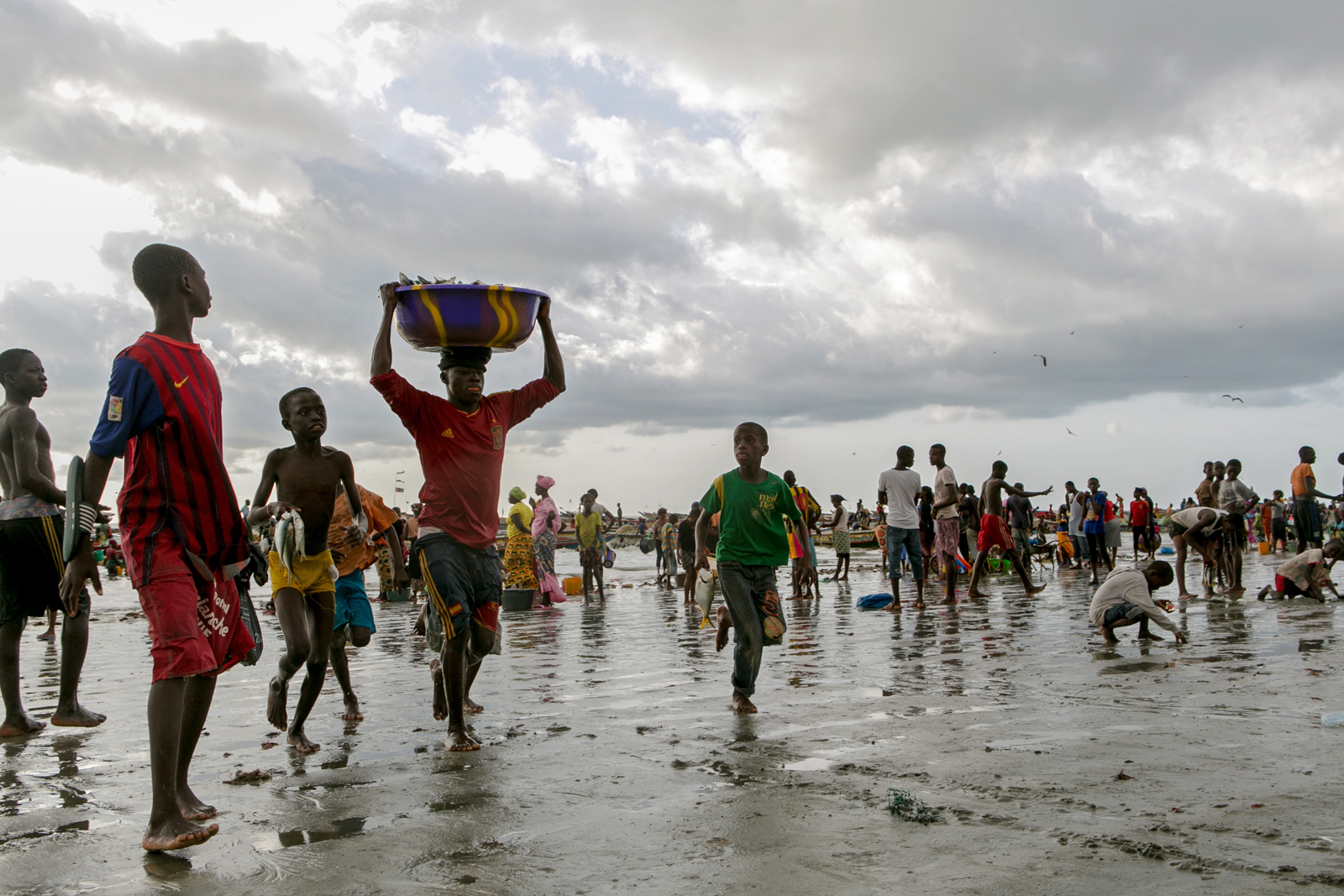
Fsheries of Sao Tome and Principe

Besides taking part on the event I’ll be having meetings with the decision-makers in government, representatives from the Civil Society (NGOs) and the tourism sector. The aim is to provide scientific and practical advice and suggestions regarding the use of cetaceans as a resource, and ways of implementing and cementing t – in accordance to the material also given in the presentation.

Considerations of the voyage to be displayed daily…

Car Crash (again)

Those things that happen, they say… well with me they happen too far often! I returned from Sao Tome and Principe (West Africa); on the 27th of March (Thursday). By Friday (the 28th) I was involved in a car crash. A lady thought it was a good idea to reverse her car in the middle of the road when I was driving at 90km/h 30 meters from her, I had to get off road, tail-slide, got back on the road fully uncontrolled, banged on a back bumper from a van coming on the opposite direction and stopped a few centimetres from the road rails. Outcome? A broken light and some metal damage, very little. However a 4×4 that was behind me took most of the front part of her car. Fortunately no one got hurt!

Not happy with that, Saturday, I was coming from a night in Bar do Bruno, really wrecked and tired, fell asleep on the wheel and smashed my car against a house on a bend on my way home. Result? Car unrecoverable!

Now I’m on foot and riding my bike very often (good to diminish my carbon footprint!). However, by the end of the month I’ll get back on sending carbon to the atmosphere with a 22 year old Volkswagen Golf, an old-school retro model. I know, it pollutes more than the new engines and so on, but is the only thing I can afford at the moment. What I can say is that I’m cooking some projects to compensate this, and I’ll post some stuff soon enough :-)

Darfur – Don’t Look Away

The strategy is simple. Rape as many women as possible. As brutally as possible. As publicly as possible. That is how the state backed the Janjawid militia in Darfur, in western Sudan are terrorising the civilian population.
The UN calls it ‘the world’s worst humanitarian crisis’. But what is causing the violence in Darfur and why hasn’t the world acted to stop it?
Darfur fits the pattern of Cambodia, Liberia, Peru, Bosnia, Sierra Leone, Rwanda, Somalia and Uganda, with violence against women being systematically used by warring parties.
The solution is equally simple. Send an effective peacekeeping force to the region, with a mandate to protect the people.

The magazine New Internationalist of June 2007 reads: Darfur, Don’t look away. Well that is exactly what we have done so far.

Darfur civilians have suffering a State sponsored ethnic cleansing. The articles provided by New Internationalist come to shade some light on the issue and reveal why some outside countries profit from Sudan’s instability and civil war; like China very interested in Sudan’s oil reserves.

Check out and read the pieces on Darfur here (also look for the “other articles of this issue”:
http://www.newint.org/features/2007/06/01/keynote/

Africa mama Africa

My childhood was deeply marked by a remarkable woman, Martha Ferreira, whom I consider to be my grandmother, even though we weren’t connected my blood-links. She was from Inhambane, Mozambique. Her way of life shaped and meant by and to that land, I truly believe she was left with a huge emptiness the day she had to abandon Africa to come and live in Portugal, an emptiness that was never filled again until 2004 when se finally died at the beautiful age of 98.

The only place I’ve been in Africa is Egypt and that is a very different Africa from the one she described to me. I have many stories visualized in my head from her narratives, about people, places and situations. I learnt to understand her perspectives and emotions regarding that ancestral place, their character and motivation. However, most of us see Africa only as a place stained by bloodshed, hunger and poverty.

I decided to write this small opinion-article (sort of thing) after the convergence of many stimuli arriving from different directions.

It started with some e-mails exchange with a dear friend of mine, Ariane Kunze, a German lawyer, now in Kenya doing some voluntary work with the community there. By chance the World Social Forum (WSF) this year – from the 20th to 25th January 2007 – took place in Nairobi, where it was held for the first time in Africa since its first edition in 2001. At this last gathering there were 66,000 registered attendees, and 1,400 participating organizations from 110 countries, making it the most globally representative WSF so far. But things weren’t running as expected…

The WSF is an annual meeting held by members of the anti-globalization movement to coordinate world campaigns, share and refine organizing strategies, and inform each other about movements from around the world and their issues. It tends to meet in January when its “great capitalist rival”, the World Economic Forum is meeting in Davos, Switzerland.

However, the meeting in Nairobi was excluding the people it was meant to protect and help, the poor and oppressed, so things were a bit grim at the beginning to start with. Fees were too high for the Kenyans to attend; food at the venue was 3 times higher than outside; security and armed soldiers everywhere; not to mention the sponsors. So Adam Ma’anit who was present was very righteous in wondering “Anti-war yet surrounded by soldiers? Anti-corporate yet brought to you by Celtel and Kenya Airways? Anti-capitalist yet food and water too expensive for most Kenyans and southerners to afford? WSF or WEF?”

But come on, it was the WSF, so one day everyone woke up to a spontaneous and powerful protest, people from Kibera (the biggest slum in all Africa that was back to back with the place were the WSF was taking place) came up, invaded the area and demanded the right to express themselves. Outcome; entry fees were lowered than abolished, street vendors were allowed at the venue and a Pakistani group sold “chapatis against Bush” and “anti-capitalist curry” at affordable rates, sweet!

Also according to Ariane: “Concerning the WSF my feelings are split. On the one hand this big event was not very well organized. Very often I did not find the workshop or seminar I wanted to attend. Also the contents of the speeches were sometimes very poor – very populist, just empty slogans. On the other hand, this event was a very good opportunity for different organizations to get to know each other and to extend their networks. What I also liked was that for the first time the forum did not just talk about the poor but also went to them. Many activities took place in the slums with slumdwellers.”

“In the last few days, the forum was invigorated with a new vitality.”This is the World Social Forum, not the World Economic Forum,” was the chant. We made the most of the time we had left. It is just unfortunate that it had to be this way. After seven years of being the de facto AGM of the global justice movement, perhaps the World Social Forum organizers need to do some soul-searching and reconnect with its founding ideals. Moi’s stadium (who ironically banned the teaching of Marxism under his 20-year reign) is where activists put the “social” back in to the World Social Forum. Let’s keep it that way.” Adam Ma’anit stated.
More articles about the WSF can be found at:
http://interact.newint.org/tags/world-social-forum

Another factor that leads me to write this article is the movies… what the hell is wrong with Hollywood these days? Relieving consciences or just a gold mine they found? And why is always the mzungu (meaning white people in Swahili) saving the day? Why is not an native African resolving their own problems? Maybe, because it doesn’t sell as good…

There are many examples some with gold status attached to their covers: “The Constant Gardener” (Fernando Meirelles, 2005); “Lord of War” (Andrew Niccol, 2005); “Shooting Dogs” (Michael Caton-Jones, 2005); The Last King of Scotland (Kevin Macdonald, 2006); Babel (Alejandro González Iñárritu, 2006); and Blood Diamonds (Edward Zwick, 2006).

We have witnessed that the interest for Africa goes through phases: slavery, the colonial period, and now the democratization processes. I believe that the movies we have been watching are just another example of how Africa continues to be deceived and hoodwink with good intentions. The Occident makes a “mea culpa” without openly assuming any effective responsibility for what is happening. It calms down consciousnesses – about the past and present – instead of awake them…